The Real Cost of Buying in Orange County: What to Budget Beyond the List Price
The list price is just the starting point. Here is a plain-English breakdown of closing costs, taxes, HOA and Mello-Roos, insurance, and inspections — and how to plan for them before you write an offer.
The number on the listing is not your total.
In Orange County the price you agree to is the headline, not the arithmetic. Most buyers who feel surprised at closing were not surprised by the price — they were surprised by everything that rides with it. This is the short, practical list to plan with before you write an offer.
1. Closing costs: plan 2 to 3 percent of the price
On a $950,000 purchase that is roughly $19,000 to $28,500 at the table, depending on loan type and seller credits. In this market it typically includes:
- Escrow and title — title search, insurance, and escrow fee split by custom. In OC the buyer usually pays the lender's title policy and roughly half of escrow.
- Lender charges — origination, appraisal, credit, and any points you choose to buy.
- Prepaids — prorated property tax and homeowner insurance that fund your impound account on day one.
- Recording and transfer — county recording fees and documentary transfer tax.
Ask your lender for a Loan Estimate early, then an updated one once you are under contract. Compare line by line, not just the bottom number.
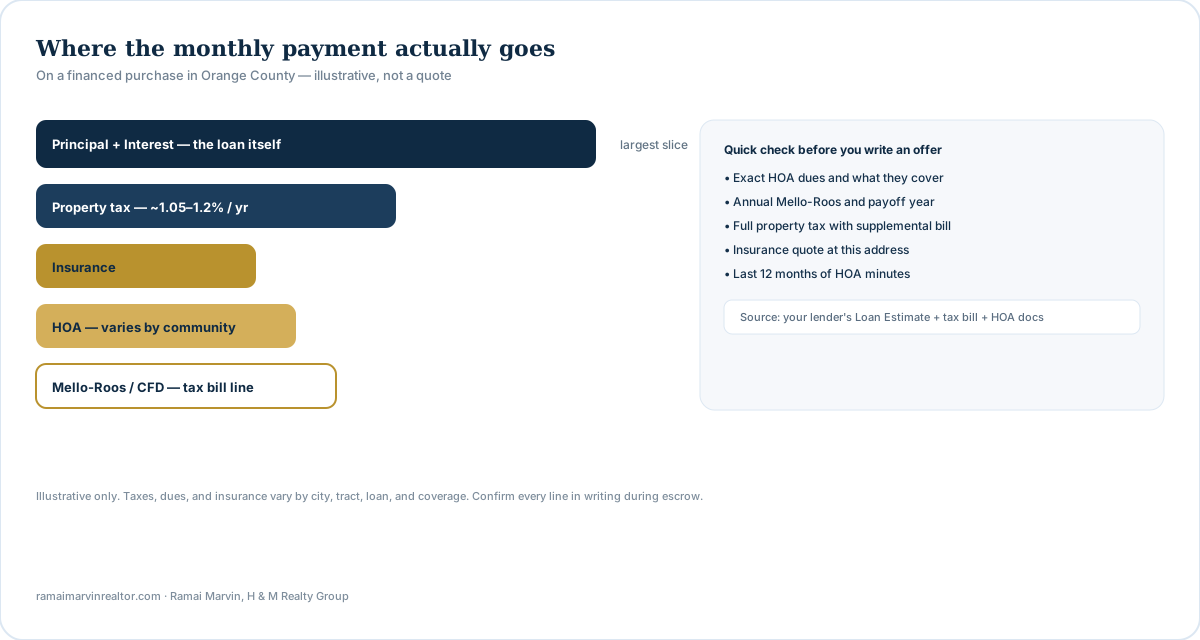
2. Property tax: roughly 1.05 to 1.2 percent per year before bonds
Orange County's base levy is about 1 percent of assessed value, plus small voter-approved bonds. On a $950,000 assessed value, many owners pay about $9,975 to $11,400 a year, often through the monthly mortgage payment. After you close, the assessor mails a supplemental bill that covers the difference between the seller's assessed value and yours. Budget for it — it does not wait for January.
3. HOA and Mello-Roos: the two fees buyers confuse
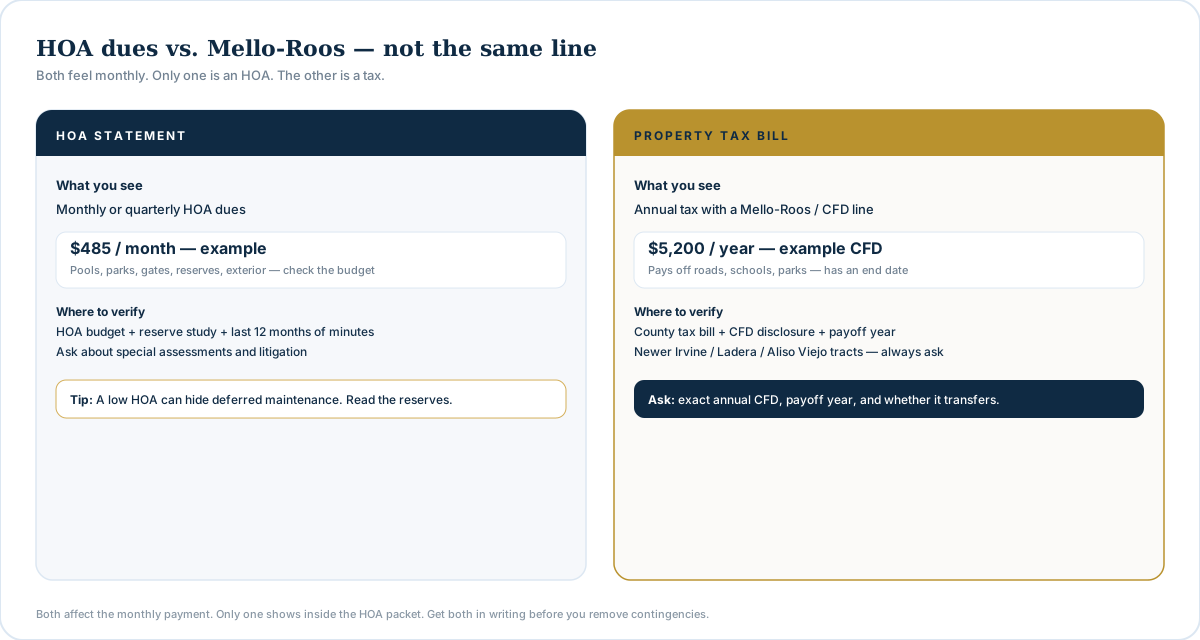
They show up on the same monthly statement, but they mean different things.
HOA dues pay for the things you share — pools, parks, gates, exterior maintenance, and reserves. In OC the range is wide: under $300 for a single-family tract with light amenities, $400 to $700 plus for condos and townhomes in newer villages. Read the budget, the reserve study, and the last 12 months of minutes. Look for special assessments, litigation, and any deferred maintenance.
Mello-Roos (CFD) and similar bonds repay the roads, schools, and parks that made a newer community possible. They are not HOA dues, they are an extra tax line on your property tax bill, often $3,000 to $7,500 a year in villages built after the late 1980s — Irvine, Ladera Ranch, parts of Mission Viejo, Aliso Viejo, and newer Anaheim Hills tracts. Ask for the exact dollar amount and the payoff year before you remove contingencies.

4. Homeowner insurance: higher than inland, and worth pricing early
Coastal proximity, brush exposure, and reconstruction costs in OC push premiums above the national average. A typical single-family premium today lands around $1,400 to $3,000 a year for standard construction, more for expanded replacement-cost coverage or a hillside lot. Condos carry a master policy, but you still need walls-in coverage and loss assessment. Get a quote with the property address during your due-diligence window so your lender's impound math is real, not a guess.
5. Inspections and due diligence: $1,000 to $2,500 well spent
A general home inspection in OC is usually $500 to $800, then add termite clearance ($75 to $150), sewer lateral camera ($150 to $350), and pool or roof letters where relevant. On condos, the HOA document packet runs $250 to $500 and is worth reading end to end. These reports are where price adjustments and repair requests come from. They are also where you learn what not to waive under pressure.

6. Utilities, maintenance, and the parts no one puts in a spreadsheet
Water and power for a 1,800-square-foot home often run $200 to $400 a month combined. Add pest control, HVAC service, landscape, and a simple rule for upkeep: set aside 1 percent of the home's value a year for maintenance. On a $900,000 home that is $9,000 a year or $750 a month in the plan, not in an emergency.
A quick way to test affordability
Take the monthly number your lender gives you, then add property tax, insurance, HOA, and Mello-Roos to it on one line. That is the payment you actually write. Then subtract a month of utilities and that maintenance reserve. What remains is not just whether you can qualify, but whether you can live comfortably after you close. Underwrite yourself more conservatively than any automated approval will.
Before you write an offer, get these five answers
- What are the exact monthly HOA dues, and what do they cover?
- What is the annual Mello-Roos and when does the bond pay off?
- What is the full property tax bill, supplemental included, for the tax year you will own?
- What does insurance cost at this address with the coverage your lender requires?
- What did the last 12 months of HOA minutes say about assessments or litigation?
Bring these numbers to your home search and to a short conversation with Ramai before you commit. The right plan turns a competitive offer into a confident one — and keeps the first year in the home from feeling tighter than it needs to.
Tip: If you already own in OC and are thinking about a move, a quick valuation grounded in nearby sales is more useful than an algorithm's estimate. Request one on the contact page — no obligation, usually within one business day.
Want the real numbers at your price point?
Ramai will map closing costs, taxes, HOA and Mello-Roos for the homes you are actually considering — with the documents to back it up. No obligation, usually within one business day.
Or call 949-910-7040 · ramaimarvin@gmail.com
This article is for general information and does not constitute financial, legal, or tax advice. Figures are illustrative and vary by lender, city, HOA, and coverage. Confirm every number in writing during escrow and consult your licensed professionals.